
Intermodalism: Building a more connected freight network
The Western Cape Mobility Department (WCMD) is advancing a proposed province-wide intermodal terminal network to support a more efficient, connected and resilient freight system.
The proposed network aims to strengthen connections between road, rail, inland freight hubs, seaports and airports, while supporting future investment and alignment with national freight and rail planning.
What is intermodalism?
Intermodalism is the movement of freight using more than one mode of transport.
For example, trucks can collect and deliver goods over shorter distances, while rail can be used for longer-distance freight movements. Intermodal terminals connect these modes and can also provide services such as customs clearance, storage, cargo consolidation, and container handling.
By combining the flexibility of road with the capacity and long-distance advantages of rail, intermodalism can help create more efficient freight journeys.
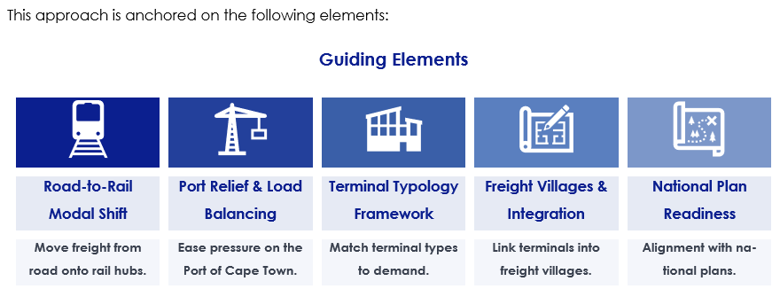
Why does it matter?
A better-connected freight network can support the Western Cape's economy while reducing pressure on infrastructure.
Economic opportunity
Freight demand modelling for the province identified roughly 10.4 million tonnes of road freight that could shift to intermodal rail terminals. A meaningful share of this is commercially advantageous. Intermodalism is therefore not a theoretical ideal; it is a quantified opportunity to lower total logistics costs for freight owners.
Infrastructure relief
Moving suitable freight from road to rail could help reduce congestion, road maintenance pressures and the emissions associated with freight movement.
Port Capacity
It eases port-system constraints. Well-placed inland terminals let volumes be consolidated, buffered and routed strategically across the province. Inland terminals can hold cargo until the port is ready and so it arrives in a steadier flow rather than surging into limited port space. Certain categories of inland terminals can also take on back-of-port functions, such as container storage, staging and customs clearance, freeing up scarce land at the port and reducing congestion at its gates.
Value Creation
Intermodal terminals can also support freight consolidation, processing and other value-added activities, creating opportunities for industrial and rural economic development.
Where are we now?
WCMD has developed an initial proposed Western Cape Terminal Network, informed by freight demand modelling. The proposal identifies candidate locations and indicative terminal types across the province.
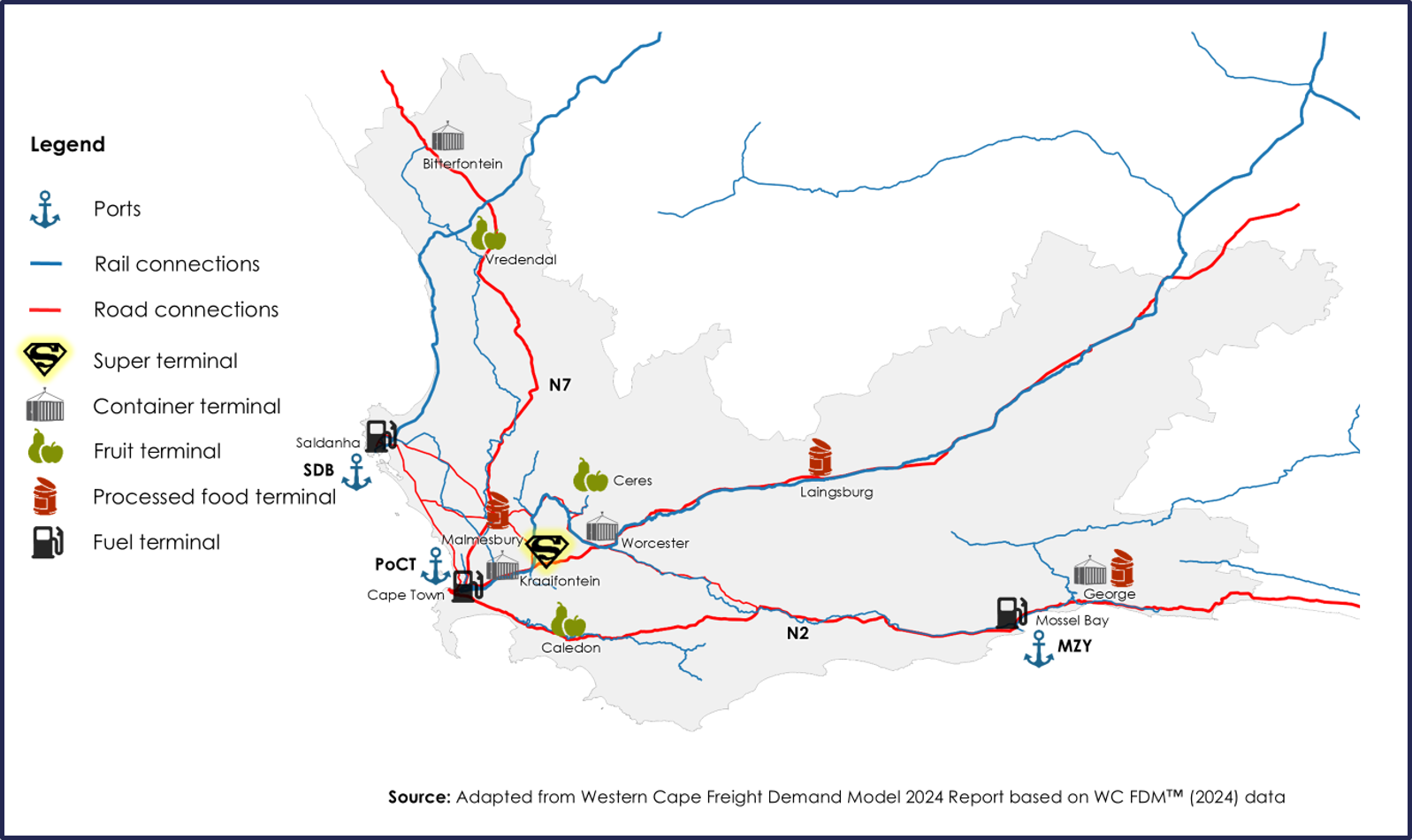
The network is still a proposal. No sites have been confirmed, and no land or site assessments have commenced.
The current focus is on testing the proposed network and gathering input from industry, government and other stakeholders through the Freight Forum and focused engagements. This input will help determine whether the proposed network provides an appropriate framework for future freight development and investment in the Western Cape.
Looking ahead
The proposed network is about taking a province-wide view of freight and identifying how road, rail, terminals and ports can work together more effectively.
One province. One connected freight network.